Making online video convert

In “Getting A Reaction From Online Video”, Brian Massey at ClickZ does a good job of breaking down what should be an obvious point: online video works better when it’s embedded in an focused landing page design. He expands on it in at a talk he gave at PubCon 2011.

For example, compare the landing page for the epMotion viral video vs. the decontextualized video below. Which one is more likely to make you want to find out about the product?

Friday Fun: Translational Music?

She Blinded Me With Science

How about a little science silliness for a Friday?  After all, you can’t have funding without the “fun”!

Did you know that there’s a strong musical undercurrent running through our greatest science labs?  Of course, music may have beneficial health effects, interesting physiological roles, or even lead to strange injuries.  But primarily, scientists want to express their feelings in song.  Here are two of my favorites, but I’m sure that there any others out there.  Post some great  links in the comments, and be sure to have a fun Friday!


One-Pager

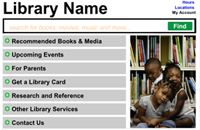
This site design (anti-design?) tool for libraries takes a bare-bones approach.  Food for thought as our research portal struggles to present an ever-growing array of resources.

What makes a website excellent? Focus, great writing and appealing visual design. One-Pager helps you get there by taking a radical and sensible approach to library websites: fewer elements presented in a simple, functional interface. So you get to spend your time making your content excellent.

via Influx :: One-Pager.

Biohackers

Credit: Penguin Books

When we think of Translational Science, we imagine going from bench to bedside to community.  But what if the research itself is happening in the community?  Meet the Biohackers:

These do-it-yourself biology hobbyists want to bring biotechnology out of institutional labs and into our homes. Following in the footsteps of revolutionaries like Steve Jobs and Steve Wozniak, who built the first Apple computer in Jobs’s garage, and Sergey Brin and Larry Page, who invented Google in a friend’s garage, biohackers are attempting bold feats of genetic engineering, drug development, and biotech research in makeshift home laboratories.

In Biopunk, journalist Marcus Wohlsen surveys the rising tide of the biohacker movement, which has been made possible by a convergence of better and cheaper technologies. For a few hundred dollars, anyone can send some spit to a sequencing company and receive a complete DNA scan, and then use free software to analyze the results. Custom-made DNA can be mail-ordered off websites, and affordable biotech gear is available on Craigslist and eBay.

Is there a place for this movement in the CTSI continuum?

Facebook for scientists

When I describe UCSF Profiles to friends, I sometimes refer to it as Facebook or LinkedIn for scientists.

But I’m not the only one. All of the following science networking platforms have been compared to either Facebook or LinkedIn for scientists: Nature Network, ResearchGateVivo, Graduate Junction, Epernicus, Laboratree, Academia.edu, ScholarLynk, and iAMscientist. (Phew.)

It’s easy to launch umpteen social networks and make ambitious comparisons. Building real value and adoption is hard—which is why I enjoyed reading “Facebook for Scientists: Requirements and Services for Optimizing How Scientific Collaborations Are Established,” a 2008 paper by a team at the University of Pittsburgh, using standard HCI practices to understand challenges and needs around research collaboration as they were work to build out their Digital|Vita platform for their campus community. As we think about next steps for UCSF Profiles, it helps me to reconnect with the basic needs we’re trying to address, and look at how other projects approach the problem space.

So Close…

With all of the interesting scientific conferences going on around the world, it’s exciting to hear of one taking place in your own backyard.  Unfortunately, it’s less exciting when this knowledge comes a few days too late.  As I learned yesterday:

The second Sage Bionetworks Commons Congress will be held in San Francisco on April 15-16, 2011.  The theme will be the move towards personalized, patient-driven medicine, and the role that Sage Bionetworks can play in that transition. Expect reports from the Sage Federation, Working Groups, and exciting projects like SageCite, poster sessions and evening activities.

The conference venue? The Mission Bay Conference Center at UCSF.  However, the good news is that all of the presentations, including videos, are now available online.

Social Networking for Scientists

Yesterday NPR featured a story on ResearchGate.com, an online networking tool for scientists that boasts more than 900,000 members from 192 countries. The site currently has approximately 50,000 unique visitors per month.

From Crunchbase.com: ResearchGATE is the leading social network for scientists. It offers tools and applications for researchers to interact and collaborate. ResearchGate offers a Science 2.0 platform designed for researchers. The platform provides a global scientific web-based environment in which scientists can interact, exchange knowledge and collaborate with researchers of different fields.

The results of ResearchGate’s new search engine, called ReFind, are not merely based on keywords, but selected in an “intelligent” way based on semantic, contextual correlations.

Check it out www.researchgate.com or listen to the NPR story.

Interactive Biomedical Data Visualization

TripleMap

Continuing our theme of visualization, it looks like some pretty interesting tools are continuing to be developed.  One example is called TripleMap:

TripleMap is a data-driven software framework which gives biomedical research scientists access to massive interconnected networks of life science data. Using TripleMap you can analyze, visualize and share this information by creating “maps” of associated data which are relevant to your research.

Using a proprietary algorithm called Inferential Connectivity Analysis (ICA), TripleMap can identify connections for you between any two entities in its network. Want to know about potential connections between a protein and a disease? Want to know about potential connections between a compound and a cellular pathway? With ICA, TripleMap can perform a comprehensive, “deep” traversal of the entire TripleMap data network and identify any connecting entities. How powerful is identification of novel connections? It can be the difference between success and failure, novel insight and (less than) blissful ignorance.

Although they’re still in a closed “alpha” mode, the developer told me that they will be integrating the MedDRA ontology into it over the weekend, and he’ll send me a trial code early next week.  I’ll post a follow-up after I give it a try.

visualcomplexity.com | A visual exploration on mapping complex networks

visualcomplexity.com | A visual exploration on mapping complex networks.

I found an interesting site for interesting visualizations of networks… here’s their description of what this site is about:

VisualComplexity.com intends to be a unified resource space for anyone interested in the visualization of complex networks. The project’s main goal is to leverage a critical understanding of different visualization methods, across a series of disciplines, as diverse as Biology, Social Networks or the World Wide Web. I truly hope this space can inspire, motivate and enlighten any person doing research on this field.

A GitHub of science

A conversation on scientists’ favorite online tools on Quora led to several ideas on online tools scientists wish existed. The most popular was Marius Kembe’s idea:

Github for scientists – a distributed hosting and version control system for all parts of scientific communication, including writing, code, data, and audio/video/images. So that you could build on somebody else’s work by versioning it! Isn’t that what science is meant to be about?”

As a GitHub user in non-biomedical domains, this makes so much sense to me. Marium went on to describe the idea further on his blog:

“GitHub is a social network of code, the first platform for sharing validated knowledge native to the social web…I believe it represents a demonstrably superior way of distributing validated knowledge than academic publishing. How are these even related? Software developers rarely write applications from scratch. Instead, they often start with various modular bundles of open source code…Scientists never begin a research project from an intellectual vacuum. They stand on the shoulders of giants, building on the knowledge contained in previous publications to form a new, coherent finding…Gems on GitHub are not just code.  They also have authors whose relative contributions are automatically catalogued…This impact graph can let you know precisely which developers are responsible for this awesome-ness…By contrast, current Open Science efforts that ask scientists to ‘share all your data’ have not become mainstream, because they do not appropriately reward knowledge producers.”

[Link]