How Do You Cite a Tweet in an Academic Paper?

Twitter is getting its own standard format to fit the requirements of “publish or perish”. The Modern Language Association has developed a standard format. In his post, Alexis Madrigal takes a closer look at the shortcomings of the instructions. He writes:

It’s simple. Also, I just love the “Tweet” at the end. However, it’s curious that no URL is required, especially given the difficulty of Twitter search for anything not said in the past day or two.

Here are the instructions developed by the Modern Language Association:

Begin the entry in the works-cited list with the author’s real name and, in parentheses, user name, if both are known and they differ. If only the user name is known, give it alone.

Next provide the entire text of the tweet in quotation marks, without changing the capitalization. Conclude the entry with the date and time of the message and the medium of publication (Tweet). For example:

Athar, Sohaib (ReallyVirtual). “Helicopter hovering above Abbottabad at 1AM (is a rare event).” 1 May 2011, 3:58 p.m. Tweet.

The date and time of a message on Twitter reflect the reader’s time zone. Readers in different time zones see different times and, possibly, dates on the same tweet. The date and time that were in effect for the writer of the tweet when it was transmitted are normally not known. Thus, the date and time displayed on Twitter are only approximate guides to the timing of a tweet. However, they allow a researcher to precisely compare the timing of tweets as long as the tweets are all read in a single time zone.

In the main text of the paper, a tweet is cited in its entirety (6.4.1):

Sohaib Athar noted that the presence of a helicopter at that hour was “a rare event.”

or

The presence of a helicopter at that hour was “a rare event” (Athar).

Crowdsourcing the Analysis and Impact of Scholarly Tweets

“Twitter is one of the fastest tools to discover newly published scholarly papers”, Martin Fenner wrote in one of his earlier posts. Now Fenner and Euan Adie finished the first phase of an interesting new experiment, the CrowdoMeter project.

In the last 2 months, they used crowdsourcing to analyze the semantic content of almost 500 tweets linking to scholarly papers (953 classifications by 105 users for 467 tweets). Their preliminary results show: 

  • 3 predominant subject areas: Medicine and Health, Life Sciences, and Social Sciences and Economics.
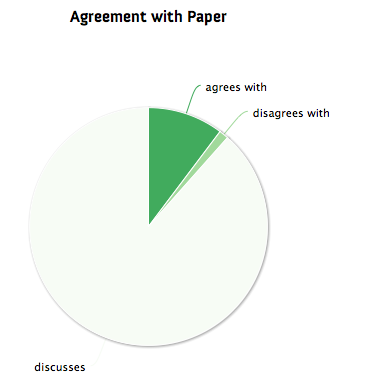
  • Most tweets (88%) discussed the papers, 10% were in agreement, 3% disagreed.
  • Most papers are not tweeted by their authors or publishers

In his recent guest post on Impact of Social Sciences, Fenner makes the argument that “social media, and Twitter in particular, provide almost instant, relevant recommendations as opposed to traditional citations.

A few years from now the ‘personalized journal’ will have replaced the traditional journal as the primary means to discover new scholarly papers with impact to our work.

What is still missing are better tools that integrate social media with scholarly content, in particular personalized recommendations based on the content you are interested in (your Mendeley or CiteULike library are a good approximation) and the people you follow on Twitter and other social media.

Fenner’s view is also based on Gunther Eysenbach’s study from 2011 that showed “highly tweeted papers were more likely to become highly cited (but the numbers were to small for any firm conclusions; 12 out of 286 papers were highly tweeted)”.

Fenner and Adie are using altmetric.com to track the scholarly impact of your research. Other tools – some of which we wrote about – include  ReaderMeterTotal ImpactPLoS Article-Level Metrics, and ScienceCard.

“From Twitter To Tenure”: MD Shares How Twitter Can Be A Valuable Tool For Academics

Credit: Jason Archer, http://www.academictechnology.org

There is still considerable resistance to embracing social media tools for academic purposes, but if you are reading this blog post on FutureDocs by Vineet Arora, MD,  you are probably willing to consider their positive effects. And the list of academic tweeters is growing.

Vineet shares the various ways social media has impacted her academic career including finding grant opportunities, disseminating research results, and being found as an expert for media interviews and lectures. Here is her list:

  • Media interviews – I was interviewed by Dr Pauline Chen through the New York Times who located me through – you guessed it Twitter!  She actually approached me for the interview by direct messaging me through Twitter.  She was following me and noticed my interests in handoffs on my Google profile which is linked to my Twitter account.  She was also very encouraging when I started the blog which was exciting!
  • Workshop presentations– I presented a workshop on social media in medical education (#SMIME as we like to call it), at 2 major medical meetings with 3 others (including @MotherInMed who encouraged me to start a blog and also is my copresenter at SGIM).  The idea was borne on Twitter…and the first time I actually met one of the workshop presenters (who I knew on Twitter) was at the workshop.
  • Acquired new skills  – My workshop co-presenter who I only knew through Twitter ended up being Carrie Saarinen, an instructional technologist (a very cool job and every school needs one!).  She is an amazing resource and taught me how to do a wiki.  After my period of ‘lurking’, I started my own ‘course’ wiki  dedicated to helping students do research and scholarly work which we are launching in a week.
  • Lecture invitations – Several of my lecture invitations come through social media.  Most notably, I was invited to speak for an AMSA webinar on handoffs and also speak to the Committee of Interns and Residents on teaching trainees about cost conscious medicine.  Both invitations started with a reference to finding me through Twitter or the blog.
  • Committee invitations – I am now on the SGIM communications task force as a result of my interest in social media.  Our most recent effort was a piece about‘tweeting the meeting’ with @medrants and an older piece focused on the top Twitter Myths and Tips.
  • Grant opportunities – I recently submitted a grant with an organization that I learned of on Twitter – Initially, I had contacted Neel Shah from Costs of Careasking him if they had a curriculum on healthcare costs.  They did not, but were interested in writing a grant to develop a curriculum so they brought my team on board and we submitted together (fingers crossed).
  • Dissemination – One of the defining features of scholarship (the currency of promotion in academic medical centers) is that it has to be shared.   Well, social media is one of the most powerful ways to share information.   In a recent example, we entered a social media contest media video contest on the media sharing site Slideshare.  Using social media, we were able to obtain the most number of ‘shares’ on Facebook on Twitter which led to the most number of views and ultimately won ‘Best Professional Video.’  To date, this video, has received over 13,000 views, which I was able to highlight as a form of ‘dissemination’ in a recent meeting with our Chairman about medical education scholarship.    While digital scholarship is still under investigation with vocal critics and enthusiasticproponents debating the value of digital scholarship in academia, digital scholarship does appear to have a place for spreading nontraditional media that cannot be shared via peer review.

Further reading:

Social Media Week, February 2012

Organizers host the five-day conference (February 13-17, 2012) simultaneously in London, Berlin, New York, Toronto, San Francisco and São Paulo. 

The event will explore the impact that social media has on culture, business communications and society at large.

Among the topics:

  • Mining Social Media for Consumer Insight
  • Dashboards and Metrics
  • Topical Influencers: Who Are They and How Do We Reach Them?
  • Creating Social Utilities That People Will Actually Use

More at http://socialmediaweek.org/

Surprise: Twitter unpopular with scholars

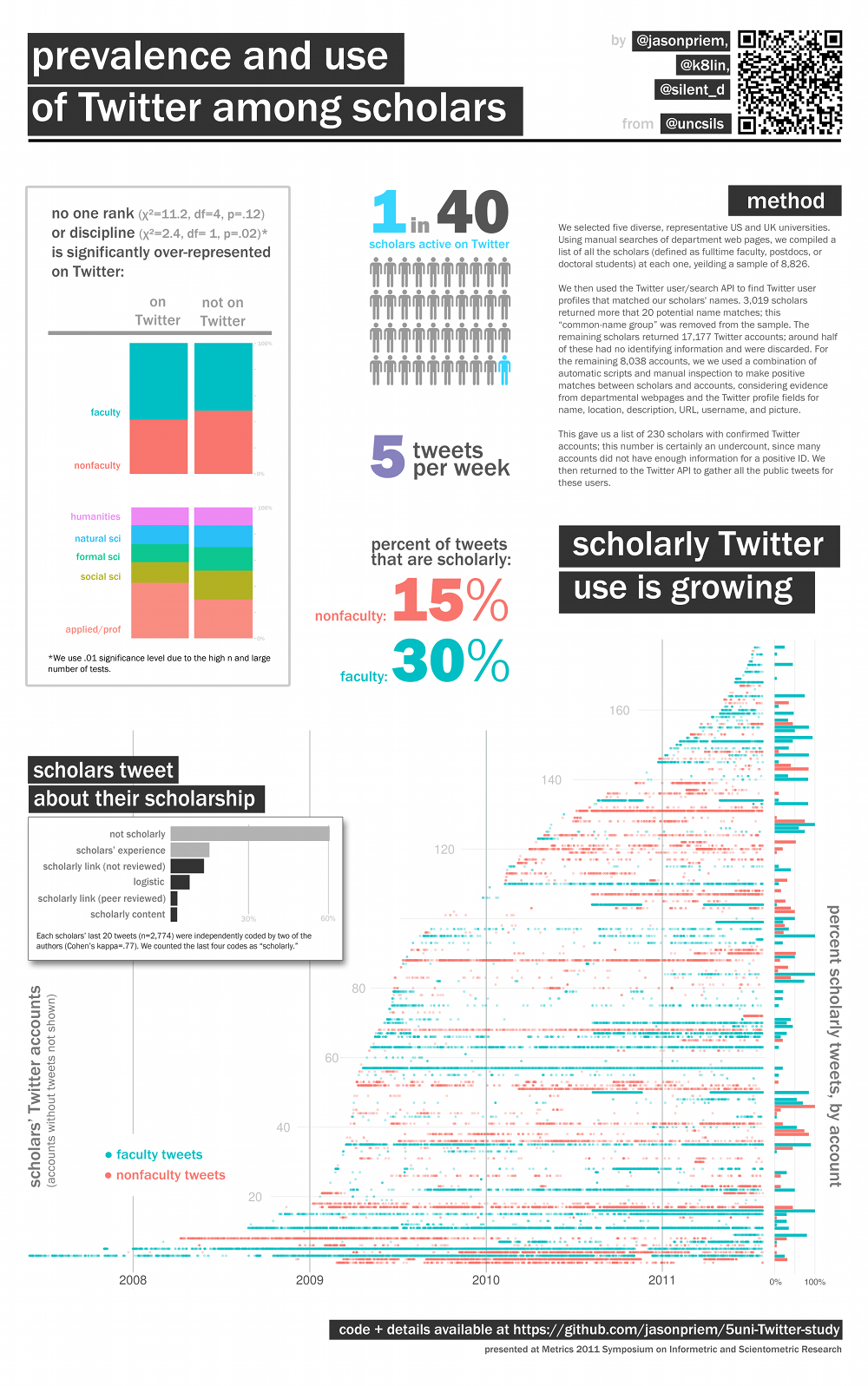
Jason Priem, Kaitlin Costello, and Tyler Dzuba, graduate students from UNC, examined Twitter usage for over 8000 scholars from five American and British universities.

The results? Sorry Twitter. Scholars are just not that into you.

Read more:

Notes from the 2011 Medicine 2.0 Summit at Stanford

Some argue that as technology advances it turns into a barrier and prevents essential human interactions, such as at the bedside. Even though this is a concern that we need to address, the Medicine 2.0 Summit 2011 provided a lot of examples that showed how technology can turn into a powerful mediator.

For those interested who did not get the chance to attend the event, here is a list of the main topics and initiatives presented that use social media, mobile computing applications, as well as Web 2.0 in healthcare and medicine to create new ways for people to connect. Please feel free to add your impressions and ideas of the summit and conference. Thanks!

1. If you are interested in learning from ePatients on how to build and leverage communities of practice and participatory medicine, you might want to explore the following blogs and platforms: 

  • Amy Tenderich’s blog Diabetesmine.com,
  • SmartMobs, authored by Howard Reingold, who was diagnosed with colon cancer and shared his experience on a blog called Howard’s Butt
  • PatientsLikeMe, where more than 115,000 members with over 1,000 conditions share their experiences to see what interventions are working for others

2. Patients have been connecting for some time. However, how can we help connect physicians and patients in a meaningful way? During the session “The Healthcare Transformers”, the panelists presented their views on personalizing healthcare and new ways for physicians and patients to communicate. 

  • Jay Parkinson, founder of HelloHealth and Futurewell, shared his passion about using creative design to improve health — and a few critical lessons learned (including” innovation is lonely” and “colleagues are critics”) as he and colleagues opened a “virtual clinic”, a “web-based patient communication, practice management and electronic health record in one solution”.
  • Lee Aase from the Mayo Clinic Center for Social Media gave a very entertaining talk on social media in the spirit of “Suus non ut Difficile” (It’s not that hard).  See one of their latest success stories: “When Patients Band Together – Using Social Networks To Spur Research for Rare Diseases”. They are very proactive about arming their health care professionals with the right tools to leverage social media for their successful communication. They even started a “Social Media Residency”. Aase also introduced the Social Media University, Global (SMUG), a post-secondary educational institution dedicated to providing practical, hands-on training in social media to lifelong learners.
  • Bryan Vartabedian, pediatric gastroenterologist, writes an interesting blog 33charts  about “the convergence of social media and medicine”.
  • Wendy Sue Swanson, practicing pediatrician, mother, and author of SeattleMamaDoc, walks a fine line and shares resources and methods that she learns from her patients, friends and family, both in and out of the field of medicine. She applies the concept of storytelling to achieve her goal of helping parents decipher some of the current medical news.
  • Ron Gutman, founder and CEO of HealthTap , who we wrote about in our earlier post, presented his solution to ending health care communication in silos. Some of the latest updates include 1) peer review features which will help give great questions more weight in the HealthTap environment, 2) offering a mobile solution, and 3) allowing participating doctors to be notified of questions coming from local patients.

3. “The Knowledge Revolution”: If you are interested in using innovations in Medical Education, you might find the following projects of interest:

  • Bertalan Mesko from Webicina.com provides curated medical social media resources in over 80 medical topics in over 17 languages to help patients and medical professionals access the most relevant social media content in their own languages on a customizable, easy-to-use platform for free.
  • Parvati Dev from Clinispace presented their virtual, 3D virtual training environment for healthcare professionals where learners can practice on realistic virtual medical scenarios and recover safely from errors.

4. The panel on  “The Interconnected Life” discussed social tools and platforms such as Epocrates, Google Correlate, which finds search patterns which correspond with real-world trends, and Quora.

5. During the panel “The New Scientist”, Michael Conlon presented VIVO , an “open source semantic web application”, a tool that is – like Profiles, Loci and others –  used or being implemented by universities across the nation to enable and support scientific collaborations and expertise discovery. 
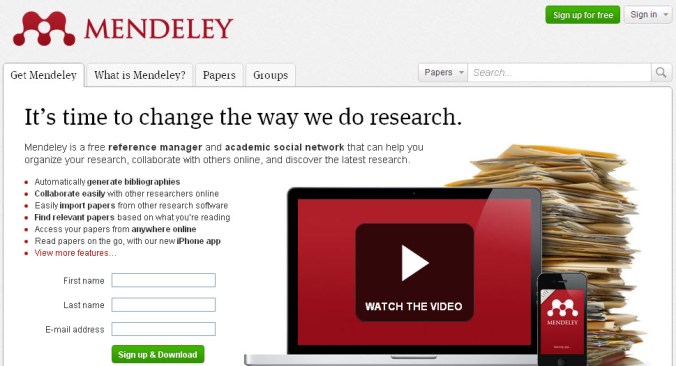
  • Jan Reichelt, Co-Founder and President at Mendeley, talked about how the tool, a free reference manager and academic social network, helps investigators organize their research, collaborate with others online, and discover the latest research.
  • Peter Bienfield from PlosOne reminded us that most of the 1.5 Million papers published every year are still “closed access”. However, as established publishers experiment with “open access”, e.g.,  Sage Open , BMJ Open , Biology Open ,and Scientific Reports ,  they validate the model…
  • And, David Pescovitz explained how he is looking for “signals” to identify far-out ideas. He is editor for Boing Boing and MAKE as well as research director with the Institute for the Future.

6. Dennis Boyle, IDEO Founding Member and Partner, gave an interesting closing keynote on “design thinking” and “a human-centered approach to innovation.” He highlighted some of their recent projects… worth exploring….

 More information:

Pharma and Social Media

Pharmaceutical companies continue to struggle with patient interactions in today’s social media environment.  While a number of pharma and biotech firms have a presence on social platforms, the conversation has traditionally been one-sided.  The companies speak, and the consumer can only listen.  However, that’s now starting to shift.
Pharma brand marketers that disable comments on their Facebook pages are in for a change. As predicted, Facebook will no longer allow pharma brands – which are typically highly risk averse when it comes to discussions about their drugs and products in social media environments – to turn off commenting on their pages.[via]

Part of the challenge is a regulatory one.  Industry continues to wait for guidance from the FDA on how social media should and should not be used.  Although the FDA held a hearing on this topic back in 2009, they continue to delay issuing any guidance (which was most recently supposed to be available in Q1 2011, but that didn’t happen).

For now, it seems that pharma and the social media providers must continue to work this out themselves.

Turning Science Communication into a Dialogue

The Stanford School of Medicine managed to promote science stories broadly without issuing any press releases. At the national CTSA Communications Meeting, John Stafford, New Media Strategist at Stanford, shared some insights how this worked.

Depending on the science story, they posted what’s newsworthy on their blog Scope , Twitter, Facebook, Flickr, and – very important – they successfully leveraged the informal relationships with their “blogger friends”. As a result, some of their stories made it into leading science magazines and newspapers.

But the story doesn’t end here: John also demoed a few online monitoring tools to measure media reach and brand leadership. These tools provide dashboards for monitoring how many and what types of media outlets pick up science stories, and even what attitudes readers have towards those stories. Here is a list of tools that might become useful to some of our organizational initiatives:

  • Radian6: Provides a platform to listen, measure and engage with customers across the entire social web.
  • ScoutLabs: A self-serve, web-based tool that includes natural language processing techniques for sentiment and tone scoring. Read article
  • Sysomos Heartbeat: Provides constantly updated snapshots of online conversations.
  • General Sentiment: Media Measurement Dashboard, Reporting Service, and Data API.
  • Jive: Social media monitoring, engagement, and measurement.
  • Klout: Helps you identify people you might want to start a conversation with.
  • Cotweet
  • Tweetreach

For those who still seek more, Stanford will be hosting a social media conference “Medicine 2.0” in September this year.