UK Government – Portal Model?

Alpha.gov.uk is an experimental prototype of a single website for UK Government, designed to use “open, agile, multi-disciplinary product development techniques and technologies, shaped by an obsession with meeting user needs. ”

The home page consists of a gigantic search feature, a short list of most popular tools and topics with a “browse more” link, latest news, and  a well-below-the-fold menu of governmental categories.

Another potential model for a portal that doesn’t overwhelm users. If they can do it for the UK government, surely we can do it for research resources at UCSF!

Take a look at the minimal feedback tool (interior pages).

Open Source Genetics

We’re familiar with open source software and open source data.  Now it looks like we need to add open source molecular biology to the list.

The same concepts that have lead to open source rockin the software world have spawned the beginning of a revolution in biotech. An organization called Biofab, funded by the NSF and run through teams at Stanford and Berkeley, is applying open development approaches to creating building blocks (BioBricksTM from BioBricks Foundation) for the bio products of the future. Now, the first of those building blocks based on E. coli are just rolling off the production line. This, according to the organizers, represents “a new paradigm for biological research.” (via)

Read more:

Compelling Video Describes New Visualization Tool “Many Eyes”

It can be challenging to create animated video that conveys a complex message. Here is a great example that shows it’s doable – mind you, without a single spoken word.

A 60 second social story about developing and refining ideas, gaining insight and sharing through community; all based on the premise that many sets of eyes are better than one!

Take a look and let me know what you think. – Btw, the visualization tool “Many Eyes“, developed by IBM, is worth a look as well.

Measuring scholarly impact, beyond citation scores

How do you track scholarly impact, beyond citation-counting? Princeton computer scientists Sean Gerrish and David Blei developed a model based on the hypothesis that the most impactful publications will impact the mix of terminology used in subsequent work in the field, using corpora from Nature, PNAS, etc.:

“Identifying the most influential documents in a corpus is an important problem in many fields, from information science and historiography to text summarization and news aggregation. Unfortunately, traditional bibliometrics such as citations are often not available. We propose using changes in the thematic content of documents over time to measure the importance of individual documents within the collection. We describe a dynamic topic model for both quantifying and qualifying the impact of these documents. We validate the model by analyzing three large corpora of scientific articles.” (via)

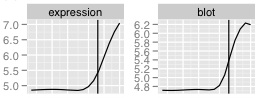
For example, they show how after the publication of “Molecular cloning of a cDNA encoding human antihaemophilic factor” in 1984, terms very frequently used in the highly-cited paper (e.g. “expression” and “blot”) became much more commonplace in the field. This content-based approach makes for an interesting supplement to bibliometric approaches that rely primary on author-generated citations.

Read more:

Scientists, Social Media, and Web 2.0

Here are two interesting postings regarding science and the “new web”.

First, how do most labs view the use of social media?  Not very highly, if you believe the results from a recent survey by Lab Manager Magazine:

Laboratories are at the forefront of research and analysis. But when it comes to communication, they are followers rather than leaders and can be very slow to adopt innovations. The use of social media is a case in point, as a recent survey of nearly 200 lab managers revealed. There are six good reasons for labs to explore the opportunities offered by the social media…

This could also be part of a bigger event, which some say is the demise (or maybe transition) of science 2.0.  As David Crotty argues in “Not with a Bang: The First Wave of Science 2.0 Slowly Whimpers to an End“:

The Nature Network launched in 2006, organized around researchers in Boston, then went global in 2007, five years ago. It perhaps offered the high-water mark in terms of the irrational exuberance by publishers and other companies in building big Web 2.0 tools for scientists. For a time, the widespread adoption of these tools seemed inevitable, and business models were an afterthought when investing in revolutionary new technologies.

Five years on, reality has reared its ugly head, and, as is often repeated here at the Scholarly Kitchen, culture has trumped technology. It turns out that what works well for some cultures does not immediately translate into success in others. Rather than focusing on the needs of the research community, much of what passed for Science 2.0 was an attempt to force science to change — to make the culture adapt to the tools rather than the other way around.

Do we see either of these phenomena in our day-to-day interactions?

World’s first crowdsourced clinical trial?

PatientsLikeMe, an online community where individuals can track their conditions and compare symptoms with algorithmically-similar patients, just published in Nature Biotechnology what it calls  “a patient-initiated observational study refuting a 2008 published study that claimed lithium carbonate could slow the progression of the neurodegenerative disease, amyotrophic lateral sclerosis (ALS).”

The story in the Wall Street Journal adds:

“A new clinical trial found that lithium didn’t slow the progression of Lou Gehrig’s disease, but the findings released Sunday also showed that the use of a social network to enroll patients and report and collect data may deliver dividends for future studies. The study was based on data contributed by 596 patients with the disease, formally called amyotrophic lateral sclerosis or ALS. By showing that the drug didn’t have any effect on progression of the condition, it contradicted a small study three years ago that suggested such a benefit was possible. The new study, published online in the journal Nature Biotechnology, represents an early example of how social networking could play a role in clinical trials, an area of medical science with strict procedures that many would consider especially difficult to apply in the online world.” [via]

Read more:

“No Health Without Research”

For the first time in its history, the World Health Report 2012 will focus on the theme of research for better health. To “complement and substantiate the key messages” in the report, the WHO and PLoS launched a new initiative to invite the submission of research papers.

Decisions on healthcare are still made without a solid grounding in research evidence, and an impetus is required for this state of affairs to change. Aimed at ministers of health, the report will provide new ideas, innovative thinking, and pragmatic advice on how to strengthen health research systems.

Let your colleagues and researcher friends know…
More info:

Image Credit: Kees Straver at flickr.com

IRB Approvals…A Need for Speed?

The Institutional Review Board (IRB) plays a crucial role in the process of approving and overseeing clinical trials.  Unfortunately, the time required for protocol review is often an area of great frustration for all parties involved.  In 2009, the Association for the Accreditation of Human Research Protection Programs, Inc. (AAHRPP) surveyed 196 of their client organizations, and found that the average time from protocol submission to approval by the convened IRB was almost 49 days.

While there are many factors that contribute to these long review times, improvements can be made.  Recently, the University of Maryland’s School of Medicine IRB has reported dramatic results:

Last March it took 35 days for a full Institutional Review Board (IRB) approval for a clinical trial from the University of Maryland’s School of Medicine, which reviews more than 1,000 applications annually. This March, IRB approval time dropped to 21 days, and just 13 days in February.

And those faster approvals were completed with a staff of just three full-time analysts and four coordinators, compared to eight full-time analysts at this time last year.

Reducing the time for investigators to gain IRB approvals required the School of Medicine (SOM) to streamline its business processes, retrain its staff and alter its hiring practices, to be able to do more with less. A key part of this paradigm shift was the development of new procedures and an investigator’s toolkit complete with essential documents, including up to 40 checklists and 30 worksheets that make the submission process more efficient.

Part of Maryland’s new procedures came from working with the Huron Consulting Group, who provide a free set of tools to help IRBs streamline their procedures.  Huron will also be offering a free webinar on May 25th to discuss a model for improving IRB operations.

Addressing health literacy

Clear communication is hard enough as it is, but the stakes are particularly high when it comes to health communication. According to a recent story on health literacy in the Washington Post:

“An elderly woman sent home from the hospital develops a life-threatening infection because she doesn’t understand the warning signs listed in the discharge instructions. A man flummoxed by an intake form in a doctor’s office reflexively writes ‘no’ to every question because he doesn’t understand what is being asked…Studies have linked poor health literacy, which disproportionately affects the elderly, the poor and recent immigrants, to higher rates of hospital readmission, expensive and unnecessary complications, and even death. A 2007 study estimated the problem cost the U.S. economy as much as $238 billion annually…[E]ven highly educated patients are affected, particularly if they’re stressed or sick. She cites the initial reaction of former New York mayor Rudolph Giuliani, who thought he was cancer-free when his doctor told him several years ago that his prostate biopsy was ‘positive.’ Actually, a positive biopsy indicates the presence of cancer. ” (via)

The story references Health Literacy Advisor software, a Microsoft Word plug-in that “operates like a spell-checker and scans a document for its readability and its health literacy. When it finds words, terms, or writing that clogs comprehension or reduces health literacy, it highlights these terms and offers ‘health literate’ alternatives.” While software’s not a silver bullet, it might help get us to a point where verifying the readability/usability of critical health communication might be considered at least as important as checking for typos.

Learn more:

Textual usability in government

Long form web readingEnjoy obfuscated IRS forms? You might soon be disappointed. President Obama signed The Plain Writing Act of 2010 in October, mandating that federal agencies use writing that is “clear, concise, well-organized.” The Office of Information and Regulatory Affairs just released their guidance on how federal agencies should comply with the act, mandating that agencies train employees to write plainly and clearly, and designate a senior official to ensure implementation.

PlainLanguage.gov has great examples of how much plain writing can improve textual usability:

A directive from the National Marine Fisheries Service:

Before: “After notification of NMFS, this final rule requires all CA/OR DGN vessel operators to have attended one Skipper Education Workshop after all workshops have been convened by NMFS in September 1997. CA/OR DGN vessel operators are required to attend Skipper Edication Workshops at annual intervals thereafter, unless that requirement is waived by NMFS. NMFS will provide sufficient advance notice to vessel operators by mail prior to convening workshops.”

After: “After notification from NMFS, vessel operators must attend a skipper education workshop before commencing fishing each fishing season.”

A training document from the Veterans Benefits Administration:

Before: “The second change in the law provides an opportunity to resume work without affecting your entitlement to compensation at the total disability rate. However, this alteration in the law does not modify the requirement that you immediately report any employment to this office.”

After: “The law now says you can go back to work without losing your ability to receive total disability compensation. You still have to let us know right away when you do go back to work.”

An NIH factsheet for the general public:

Before: DNA test for Charcot-Marie-Tooth disease: Geneticists and cell biologists have exploited a neurologically impaired “pale and trembling” mouse strain, in conjunction with new genomic technologies and information from the known mouse and human chromosomal DNA sequences, to rapidly identify a mutation that causes a subtype of the Charcot-Marie-Tooth neurological disorder that affects one in 2,500 people in the United States.  Knowledge of the specific gene defect will enable development of a DNA test to confirm the diagnosis in patients and predict risk for family members.  The disorder presents with progressive arm and leg pain that that begins in early adulthood and leads to difficulty walking and manipulating objects.  The mutation in the FIG4 gene leads to a deficiency of a signaling phosphatase enzyme that is important in maintaining neurological connections in specific regions of the brain as well as in peripheral sensory and motor nerves.

After: Gene Found for Charcot-Marie-Tooth disease: Charcot-Marie-Tooth disorder, one of the most common inherited neurological disorders, affects one in 2,500 people in the U.S. Its symptoms start in early adulthood and include progressive arm and leg pain that leads to difficulty walking and manipulating objects. Using a special strain of mice, new genomic technologies, and information from the mouse and human genome sequences, researchers rapidly identified a mutation that causes a subtype of the disease. Knowledge of the specific gene defect will enable development of a DNA test to confirm the diagnosis in patients and predict risk for family members.

Learn more: