Today I learned about KickStarter, a funding platform for inventors and explorers, including artists, filmmakers, and journalist. It reminded me of the Web site SciFlies where researchers can reach out to the public and promote project ideas to raise funding for testing initial ideas. We recently wrote about it in Integrating “grassroot” funding opportunities with research networking.
The key idea of KickStarter is different, though. It is a tool for mobilizing the existing networks of the project creator 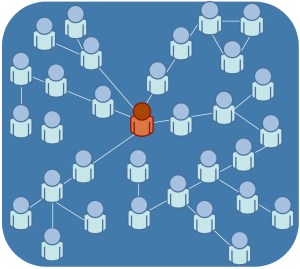 to generate support. Site users can explore projects by various categories, view information about the pledged score, about how much is already funded, and when the ‘pledge drive’ will end.
Project creators keep the full ownership and control. People who pledge receive access to all project updates, which the project creator posts on the project blog. He decides which of the posts are publicly viewable and which exclusive to the backers. In addition, backers can ask the project creator questions via the “Send Message” button on any project page. Funding is all or nothing. Money is collected only if a project reaches or exceeds its funding goal before time expires.
I’m wondering whether such a tool could be helpful to researchers who want to raise small funding. But even more, it intrigues me whether it could help them find collaborators. Finding collaborators can go both ways: it may involve looking for a researcher in a specific discipline, but it could also be part of a ‘project market place’ where researchers post projects for which they need a collaborator.
![SpeedNetBell_160[1]](https://biomed20.ucsf.edu/wp-content/uploads/2009/09/speednetbell_1601.jpg?w=676 "SpeedNetBell_160[1]") set up to minimize noise, maximize easy movement around the tables, and facilitate conversation”. Basic scientists and clinical & translational researchers “sit on opposite sides of a table and chat for 3 minutes until a bell rings, signaling that it’s time to move on and strike up a new conversation. This process continues until everyone in one group has met everyone in the other group”. As a result, “eighty-five percent of the participants said they met at least one potential collaborator”.
set up to minimize noise, maximize easy movement around the tables, and facilitate conversation”. Basic scientists and clinical & translational researchers “sit on opposite sides of a table and chat for 3 minutes until a bell rings, signaling that it’s time to move on and strike up a new conversation. This process continues until everyone in one group has met everyone in the other group”. As a result, “eighty-five percent of the participants said they met at least one potential collaborator”. What is the best web design for a social networking platform? We’re certainly thinking about this as we plan on the release of UCSF Profiles, our research (as opposed to ‘social’) networking site. Smashing Magazine has a
  BioMed 2.0