A Tool to Turn Networks into Backers

Today I learned about KickStarter, a funding platform for inventors and explorers, including artists, filmmakers, and journalist. It reminded me of  the Web site SciFlies where researchers can reach out to the public and promote project ideas to raise funding for testing initial ideas. We recently wrote about it in Integrating “grassroot” funding opportunities with research networking.

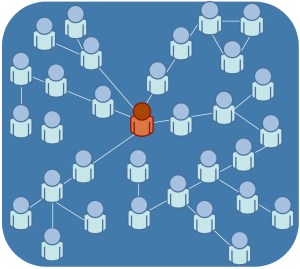
The key idea of KickStarter is different, though. It is a tool for mobilizing the existing networks of the project creator pic blog.pptto generate support. Site users can explore projects by various categories, view information about the pledged score, about how much is already funded, and when the ‘pledge drive’ will end.
Project creators keep the full ownership and control. People who pledge receive access to all project updates, which the project creator posts on the project blog. He decides which of the posts are publicly viewable and which exclusive to the backers. In addition, backers can ask the project creator questions via the “Send Message” button on any project page. Funding is all or nothing. Money is collected only if a project reaches or exceeds its funding goal before time expires.

I’m wondering whether such a tool could be helpful to researchers who want to raise small funding. But even more, it intrigues me whether it could help them find collaborators. Finding collaborators can go both ways: it may involve looking for a researcher in a specific discipline, but it could also be part of a ‘project market place’ where researchers post projects for which they need a collaborator.

Researchers test ‘Google Wave’

Recently we mentioned ‘Google Wave’ in the post “Google Wave: Next generation communication & collaboration tool” which is expected to be released later this year. Even though it is not designed for the specific needs of science, some researchers are testing how it might serve their work purposes. Biochemist Cameron Neylon from the University of Southampton, UK, was among the few who could access Google Wave prior to its release. In a recent interview with Nature, Neylon makes clear that Google Wave is still a complicated application. Nonetheless, according to him there are some plausible benefits that could help transform the way researchers communicate, document their results and collaborate on manuscript preparation.

goolewave[1]

As a summary, Google Wave could be “used for collaborative authoring, to speed up writing papers and grant applications”. It’s also possible to “create automatic programs that buzz around the document, annotating it in ways that are hidden from the human reader. The automated programs, or ‘robots’, make it possible to link to related scientific documents; mark up text so that, for example, protein names are automatically linked to a protein database”. Researchers can “pull in data from elsewhere and create live graphs that update as the data change”. As a result, scientific manuscripts would no longer be “static”, but could be “converted to the format of a published paper, updated over time and retain all that annotation”.     

In addition, Neylon mentions “scientists could share their experimental processes in a way that’s hard to do at the moment. For example, as data come off a laboratory instrument via a computer, a program could insert them straight into the document” and “another program could visualize those data”. Researchers could “control, monitor and observe an experiment” and “share that wave with someone else as a template for their experiment”.


Tangential Thoughts: The “Science of Connections”

325_425_f21

For those of you who like to delve into the research of networks a couple of articles, which were recently published in Science, might be interesting.

As I learned, scientists still “tend to describe how a complex system looks and behaves”, because it’s not clear what a complex system is exactly. So far researchers define it as something that “consists of many elements that interact so strongly that they tend to organize themselves in one way or another”.  As a comparison: “A car may be complicated, but it is not a complex system, as each of its parts interacts with a few others in a predictable way. But cars in traffic form a complex system, as drivers’ jockeying for position can lead to surprises such as ‘phantom’ traffic jams that arise for no obvious reason”.

Some of the articles:

Reading “Predicting the Behavior of Techno-Social Systems” I learned about what brings us closer to achieving true predictive power of the behavior of techno-social systems and that there is the need for a “network” mindset. The article focuses on human interactions and mobility and talks about moving the analysis of networks from “small social groups” to the “quantitative analysis of social aggregate states”.

Scale-Free Networks: A Decade and Beyond” talks about whether real networks as the society, the Internet, or the cell could function seamlessly if their people, nodes, or molecules, were wired randomly together.

Revisiting the Foundations of Network Analysis” explores when a node is a node, standard frameworks, network processes and the choice of the right network presentation. Some of the key words for me: “reality mining”, which has been defined as the “collection of machine-sensed environmental data that are related to human social behavior”.


CommentPress for collaborating on documents

CommentPress is an “open source theme for the WordPress blogging engine that allows readers to comment paragraph by paragraph in the margins of a text.”

See it in action & read about its development at http://www.futureofthebook.org/commentpress/about/

This is a tool that has potential for developing ideas submitted to Virtual Home’s open forums. (Although I don’t see anything about how to incorporate comments into the main text. )

New Online Initiative for Mining

The PsychHTS initiative invites neuroscientists with new ideas for a potential psychiatric drug target to apply for access to the infrastructure and expertise provided through an online PsychHTS platform. It has been launched by the Broad Institute in Cambridge, Massachusetts. Selected applicants are then “paired up with a Broad scientist ‘chaperone’ to develop further tests.

The editorial of the latest Nature Neuroscience views this initiative in the light of previous projects, e.g., the Molecular Libraries by the NIH.

Google Wave: Next generation communication & collaboration tool

Google announced a new in-browser real-time communication and collaboration tool that is  being hailed by some as paradigm changing. It’s expected to be released sometime later this year.

Mashable reports that Google Wave  “combines aspects of email, instant messaging, wikis, web chat, social networking, and project management into one elegant, in-browser communication client.”

Of particular interest:  Google Wave is extendable, open source,  and Open Social.

Read more about it:

Google Wave: A Complete Guide

The Top 6 Game-Changing Features of Google Wave

New Clinical and Translational Science Network

In the spirit of people being the prerequisite for success a new Clinical and Translational Science Network (CTSciNet) was recently launched by Science and the American Association for the Advancement of Science. It is described as a “career-development Web portal for clinical and translational investigators with an experimental, evolving communications infrastructure”. The portal provides articles and perspectives about training and career-related issues, resources, and partners in clinical and translational science. As it develops, CTSciNet’s online professional network intends to connect clinical and translational science communities worldwide. I like the Forum Primer that provides answers to the Forum’s most frequently asked questions and links back to the original Forum discussions.