Crowdsourcing for idea generation

Can big institutions get better ideas by including more people? High-profile crowdsourced ideation projects in our communities include:

  • Harvard Catalyst ran a contest last year, inviting Harvard and external community members to come up with their own answers to the question “what do we not know about Type 1 Diabetes?” They got over 190 responses. A panel of experts culled the list down to a dozen top award-winning ideas, and seven new projects have been funded to investigate these questions. Top ideas came from faculty, students, staff, and a patient.
  • The White House developed the SAVE Award, a national contest for federal government employees to suggest ways to make government processes cheaper and easier. The 2009 contest drew 38,000 entries, while the 2010 contest drew 18,000 entries, plus 160,000 votes. Winning ideas include not throwing away bulk medication at the VA, online scheduling at Social Security offices, and ending the mailing of print copies of the Federal Register. Check out the huge range of submitted ideas.
  • UCSF is running Bright Ideas, a campus-wide suggestion box. The campus community can share and vote on ideas. Previously-implemented Bright Ideas included a system to share unused office furniture and supplies, and the installation of audio signals for the visually impaired at Parnassus crosswalks.

(Image by Faith Grober)

Putting print books online

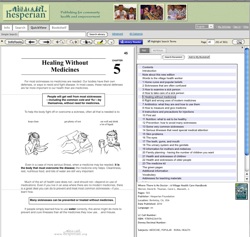
I’m a fan of the Hesperian Foundation, which publishes community-based healthcare books like Where There Is No Doctor. In addition to giving their books away at no or low cost, they’ve historically distributed gratis copies of their books in PDF format, chapter by chapter (example).

They’ve now set up a new online reading interface (vaguely similar to Google Books), but it’s Flash-based, and can’t be indexed via search engines. Is this an improvement?

Which of these online reading interfaces for print books do you like best?

(Update: fixed link)

Data anonymization: mission impossible?

Pete Warden discusses why anonymized social media datasets can be so easy to match up again:

“[T]his anonymization process is an illusion. Precisely because there are now so many different public datasets to cross-reference, any set of records with a non-trivial amount of information on someone’s actions has a good chance of matching identifiable public records. Arvind first demonstrated this when he and his fellow researcher took the “anonymous” dataset released as part of the first Netflix prize, and demonstrated how he could correlate the movie rentals listed with public IMDB reviews. That let them identify some named individuals, and then gave access to their complete rental histories. More recently, he and his collaborators used the same approach to win a Kaggle contest by matching the topography of the anonymized and a publicly crawled version of the social connections on Flickr. They were able to take two partial social graphs, and like piecing together a jigsaw puzzle, figure out fragments that matched and represented the same users in both.” (via)

(Photo by Ell Hind at Flickr)

The CDC takes on the zombie apocalypse

The CDC’s Public Health Matters blog posted a wonderful guide on how to prepare for the zombie apocalypse, starting off with a reference to zombie neurophysiology.

Conveniently, many zombie preparedness safety tips also carry over to other real-world dangers:

“In movies, shows, and literature, zombies are often depicted as being created by an infectious virus, which is passed on via bites and contact with bodily fluids. Harvard psychiatrist Steven Schoolman wrote a (fictional) medical paper on the zombies presented in Night of the Living Dead and refers to the condition as Ataxic Neurodegenerative Satiety Deficiency Syndrome caused by an infectious agent.

So what do you need to do before zombies…or hurricanes or pandemics for example, actually happen? First of all, you should have an emergency kit in your house. This includes things like water, food, and other supplies to get you through the first couple of days before you can locate a zombie-free refugee camp (or in the event of a natural disaster, it will buy you some time until you are able to make your way to an evacuation shelter or utility lines are restored). Below are a few items you should include in your kit, for a full list visit the CDC Emergency page.

  • Water (1 gallon per person per day)
  • Food (stock up on non-perishable items that you eat regularly)
  • Medications (this includes prescription and non-prescription meds)
  • Tools and Supplies (utility knife, duct tape, battery powered radio, etc.)
  • Sanitation and Hygiene (household bleach, soap, towels, etc.)
  • Clothing and Bedding (a change of clothes for each family member and blankets)
  • Important documents (copies of your driver’s license, passport, and birth certificate to name a few)
  • First Aid supplies (although you’re a goner if a zombie bites you, you can use these supplies to treat basic cuts and lacerations that you might get during a tornado or hurricane)”

Read the whole thing, before the undead hordes come for you.

Image credit

Measuring scholarly impact, beyond citation scores

How do you track scholarly impact, beyond citation-counting? Princeton computer scientists Sean Gerrish and David Blei developed a model based on the hypothesis that the most impactful publications will impact the mix of terminology used in subsequent work in the field, using corpora from Nature, PNAS, etc.:

“Identifying the most influential documents in a corpus is an important problem in many fields, from information science and historiography to text summarization and news aggregation. Unfortunately, traditional bibliometrics such as citations are often not available. We propose using changes in the thematic content of documents over time to measure the importance of individual documents within the collection. We describe a dynamic topic model for both quantifying and qualifying the impact of these documents. We validate the model by analyzing three large corpora of scientific articles.” (via)

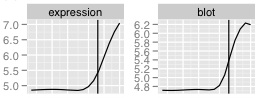
For example, they show how after the publication of “Molecular cloning of a cDNA encoding human antihaemophilic factor” in 1984, terms very frequently used in the highly-cited paper (e.g. “expression” and “blot”) became much more commonplace in the field. This content-based approach makes for an interesting supplement to bibliometric approaches that rely primary on author-generated citations.

Read more:

World’s first crowdsourced clinical trial?

PatientsLikeMe, an online community where individuals can track their conditions and compare symptoms with algorithmically-similar patients, just published in Nature Biotechnology what it calls  “a patient-initiated observational study refuting a 2008 published study that claimed lithium carbonate could slow the progression of the neurodegenerative disease, amyotrophic lateral sclerosis (ALS).”

The story in the Wall Street Journal adds:

“A new clinical trial found that lithium didn’t slow the progression of Lou Gehrig’s disease, but the findings released Sunday also showed that the use of a social network to enroll patients and report and collect data may deliver dividends for future studies. The study was based on data contributed by 596 patients with the disease, formally called amyotrophic lateral sclerosis or ALS. By showing that the drug didn’t have any effect on progression of the condition, it contradicted a small study three years ago that suggested such a benefit was possible. The new study, published online in the journal Nature Biotechnology, represents an early example of how social networking could play a role in clinical trials, an area of medical science with strict procedures that many would consider especially difficult to apply in the online world.” [via]

Read more:

Addressing health literacy

Clear communication is hard enough as it is, but the stakes are particularly high when it comes to health communication. According to a recent story on health literacy in the Washington Post:

“An elderly woman sent home from the hospital develops a life-threatening infection because she doesn’t understand the warning signs listed in the discharge instructions. A man flummoxed by an intake form in a doctor’s office reflexively writes ‘no’ to every question because he doesn’t understand what is being asked…Studies have linked poor health literacy, which disproportionately affects the elderly, the poor and recent immigrants, to higher rates of hospital readmission, expensive and unnecessary complications, and even death. A 2007 study estimated the problem cost the U.S. economy as much as $238 billion annually…[E]ven highly educated patients are affected, particularly if they’re stressed or sick. She cites the initial reaction of former New York mayor Rudolph Giuliani, who thought he was cancer-free when his doctor told him several years ago that his prostate biopsy was ‘positive.’ Actually, a positive biopsy indicates the presence of cancer. ” (via)

The story references Health Literacy Advisor software, a Microsoft Word plug-in that “operates like a spell-checker and scans a document for its readability and its health literacy. When it finds words, terms, or writing that clogs comprehension or reduces health literacy, it highlights these terms and offers ‘health literate’ alternatives.” While software’s not a silver bullet, it might help get us to a point where verifying the readability/usability of critical health communication might be considered at least as important as checking for typos.

Learn more:

Textual usability in government

Long form web readingEnjoy obfuscated IRS forms? You might soon be disappointed. President Obama signed The Plain Writing Act of 2010 in October, mandating that federal agencies use writing that is “clear, concise, well-organized.” The Office of Information and Regulatory Affairs just released their guidance on how federal agencies should comply with the act, mandating that agencies train employees to write plainly and clearly, and designate a senior official to ensure implementation.

PlainLanguage.gov has great examples of how much plain writing can improve textual usability:

A directive from the National Marine Fisheries Service:

Before: “After notification of NMFS, this final rule requires all CA/OR DGN vessel operators to have attended one Skipper Education Workshop after all workshops have been convened by NMFS in September 1997. CA/OR DGN vessel operators are required to attend Skipper Edication Workshops at annual intervals thereafter, unless that requirement is waived by NMFS. NMFS will provide sufficient advance notice to vessel operators by mail prior to convening workshops.”

After: “After notification from NMFS, vessel operators must attend a skipper education workshop before commencing fishing each fishing season.”

A training document from the Veterans Benefits Administration:

Before: “The second change in the law provides an opportunity to resume work without affecting your entitlement to compensation at the total disability rate. However, this alteration in the law does not modify the requirement that you immediately report any employment to this office.”

After: “The law now says you can go back to work without losing your ability to receive total disability compensation. You still have to let us know right away when you do go back to work.”

An NIH factsheet for the general public:

Before: DNA test for Charcot-Marie-Tooth disease: Geneticists and cell biologists have exploited a neurologically impaired “pale and trembling” mouse strain, in conjunction with new genomic technologies and information from the known mouse and human chromosomal DNA sequences, to rapidly identify a mutation that causes a subtype of the Charcot-Marie-Tooth neurological disorder that affects one in 2,500 people in the United States.  Knowledge of the specific gene defect will enable development of a DNA test to confirm the diagnosis in patients and predict risk for family members.  The disorder presents with progressive arm and leg pain that that begins in early adulthood and leads to difficulty walking and manipulating objects.  The mutation in the FIG4 gene leads to a deficiency of a signaling phosphatase enzyme that is important in maintaining neurological connections in specific regions of the brain as well as in peripheral sensory and motor nerves.

After: Gene Found for Charcot-Marie-Tooth disease: Charcot-Marie-Tooth disorder, one of the most common inherited neurological disorders, affects one in 2,500 people in the U.S. Its symptoms start in early adulthood and include progressive arm and leg pain that leads to difficulty walking and manipulating objects. Using a special strain of mice, new genomic technologies, and information from the mouse and human genome sequences, researchers rapidly identified a mutation that causes a subtype of the disease. Knowledge of the specific gene defect will enable development of a DNA test to confirm the diagnosis in patients and predict risk for family members.

Learn more:

Making online video convert

In “Getting A Reaction From Online Video”, Brian Massey at ClickZ does a good job of breaking down what should be an obvious point: online video works better when it’s embedded in an focused landing page design. He expands on it in at a talk he gave at PubCon 2011.

For example, compare the landing page for the epMotion viral video vs. the decontextualized video below. Which one is more likely to make you want to find out about the product?

Facebook for scientists

When I describe UCSF Profiles to friends, I sometimes refer to it as Facebook or LinkedIn for scientists.

But I’m not the only one. All of the following science networking platforms have been compared to either Facebook or LinkedIn for scientists: Nature Network, ResearchGateVivo, Graduate Junction, Epernicus, Laboratree, Academia.edu, ScholarLynk, and iAMscientist. (Phew.)

It’s easy to launch umpteen social networks and make ambitious comparisons. Building real value and adoption is hard—which is why I enjoyed reading “Facebook for Scientists: Requirements and Services for Optimizing How Scientific Collaborations Are Established,” a 2008 paper by a team at the University of Pittsburgh, using standard HCI practices to understand challenges and needs around research collaboration as they were work to build out their Digital|Vita platform for their campus community. As we think about next steps for UCSF Profiles, it helps me to reconnect with the basic needs we’re trying to address, and look at how other projects approach the problem space.