IRB Approvals…A Need for Speed?

The Institutional Review Board (IRB) plays a crucial role in the process of approving and overseeing clinical trials.  Unfortunately, the time required for protocol review is often an area of great frustration for all parties involved.  In 2009, the Association for the Accreditation of Human Research Protection Programs, Inc. (AAHRPP) surveyed 196 of their client organizations, and found that the average time from protocol submission to approval by the convened IRB was almost 49 days.

While there are many factors that contribute to these long review times, improvements can be made.  Recently, the University of Maryland’s School of Medicine IRB has reported dramatic results:

Last March it took 35 days for a full Institutional Review Board (IRB) approval for a clinical trial from the University of Maryland’s School of Medicine, which reviews more than 1,000 applications annually. This March, IRB approval time dropped to 21 days, and just 13 days in February.

And those faster approvals were completed with a staff of just three full-time analysts and four coordinators, compared to eight full-time analysts at this time last year.

Reducing the time for investigators to gain IRB approvals required the School of Medicine (SOM) to streamline its business processes, retrain its staff and alter its hiring practices, to be able to do more with less. A key part of this paradigm shift was the development of new procedures and an investigator’s toolkit complete with essential documents, including up to 40 checklists and 30 worksheets that make the submission process more efficient.

Part of Maryland’s new procedures came from working with the Huron Consulting Group, who provide a free set of tools to help IRBs streamline their procedures.  Huron will also be offering a free webinar on May 25th to discuss a model for improving IRB operations.

Addressing health literacy

Clear communication is hard enough as it is, but the stakes are particularly high when it comes to health communication. According to a recent story on health literacy in the Washington Post:

“An elderly woman sent home from the hospital develops a life-threatening infection because she doesn’t understand the warning signs listed in the discharge instructions. A man flummoxed by an intake form in a doctor’s office reflexively writes ‘no’ to every question because he doesn’t understand what is being asked…Studies have linked poor health literacy, which disproportionately affects the elderly, the poor and recent immigrants, to higher rates of hospital readmission, expensive and unnecessary complications, and even death. A 2007 study estimated the problem cost the U.S. economy as much as $238 billion annually…[E]ven highly educated patients are affected, particularly if they’re stressed or sick. She cites the initial reaction of former New York mayor Rudolph Giuliani, who thought he was cancer-free when his doctor told him several years ago that his prostate biopsy was ‘positive.’ Actually, a positive biopsy indicates the presence of cancer. ” (via)

The story references Health Literacy Advisor software, a Microsoft Word plug-in that “operates like a spell-checker and scans a document for its readability and its health literacy. When it finds words, terms, or writing that clogs comprehension or reduces health literacy, it highlights these terms and offers ‘health literate’ alternatives.” While software’s not a silver bullet, it might help get us to a point where verifying the readability/usability of critical health communication might be considered at least as important as checking for typos.

Learn more:

Textual usability in government

Long form web readingEnjoy obfuscated IRS forms? You might soon be disappointed. President Obama signed The Plain Writing Act of 2010 in October, mandating that federal agencies use writing that is “clear, concise, well-organized.” The Office of Information and Regulatory Affairs just released their guidance on how federal agencies should comply with the act, mandating that agencies train employees to write plainly and clearly, and designate a senior official to ensure implementation.

PlainLanguage.gov has great examples of how much plain writing can improve textual usability:

A directive from the National Marine Fisheries Service:

Before: “After notification of NMFS, this final rule requires all CA/OR DGN vessel operators to have attended one Skipper Education Workshop after all workshops have been convened by NMFS in September 1997. CA/OR DGN vessel operators are required to attend Skipper Edication Workshops at annual intervals thereafter, unless that requirement is waived by NMFS. NMFS will provide sufficient advance notice to vessel operators by mail prior to convening workshops.”

After: “After notification from NMFS, vessel operators must attend a skipper education workshop before commencing fishing each fishing season.”

A training document from the Veterans Benefits Administration:

Before: “The second change in the law provides an opportunity to resume work without affecting your entitlement to compensation at the total disability rate. However, this alteration in the law does not modify the requirement that you immediately report any employment to this office.”

After: “The law now says you can go back to work without losing your ability to receive total disability compensation. You still have to let us know right away when you do go back to work.”

An NIH factsheet for the general public:

Before: DNA test for Charcot-Marie-Tooth disease: Geneticists and cell biologists have exploited a neurologically impaired “pale and trembling” mouse strain, in conjunction with new genomic technologies and information from the known mouse and human chromosomal DNA sequences, to rapidly identify a mutation that causes a subtype of the Charcot-Marie-Tooth neurological disorder that affects one in 2,500 people in the United States.  Knowledge of the specific gene defect will enable development of a DNA test to confirm the diagnosis in patients and predict risk for family members.  The disorder presents with progressive arm and leg pain that that begins in early adulthood and leads to difficulty walking and manipulating objects.  The mutation in the FIG4 gene leads to a deficiency of a signaling phosphatase enzyme that is important in maintaining neurological connections in specific regions of the brain as well as in peripheral sensory and motor nerves.

After: Gene Found for Charcot-Marie-Tooth disease: Charcot-Marie-Tooth disorder, one of the most common inherited neurological disorders, affects one in 2,500 people in the U.S. Its symptoms start in early adulthood and include progressive arm and leg pain that leads to difficulty walking and manipulating objects. Using a special strain of mice, new genomic technologies, and information from the mouse and human genome sequences, researchers rapidly identified a mutation that causes a subtype of the disease. Knowledge of the specific gene defect will enable development of a DNA test to confirm the diagnosis in patients and predict risk for family members.

Learn more:

Making online video convert

In “Getting A Reaction From Online Video”, Brian Massey at ClickZ does a good job of breaking down what should be an obvious point: online video works better when it’s embedded in an focused landing page design. He expands on it in at a talk he gave at PubCon 2011.

For example, compare the landing page for the epMotion viral video vs. the decontextualized video below. Which one is more likely to make you want to find out about the product?

Friday Fun: Translational Music?

She Blinded Me With Science

How about a little science silliness for a Friday?  After all, you can’t have funding without the “fun”!

Did you know that there’s a strong musical undercurrent running through our greatest science labs?  Of course, music may have beneficial health effects, interesting physiological roles, or even lead to strange injuries.  But primarily, scientists want to express their feelings in song.  Here are two of my favorites, but I’m sure that there any others out there.  Post some great  links in the comments, and be sure to have a fun Friday!


One-Pager

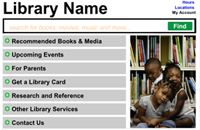
This site design (anti-design?) tool for libraries takes a bare-bones approach.  Food for thought as our research portal struggles to present an ever-growing array of resources.

What makes a website excellent? Focus, great writing and appealing visual design. One-Pager helps you get there by taking a radical and sensible approach to library websites: fewer elements presented in a simple, functional interface. So you get to spend your time making your content excellent.

via Influx :: One-Pager.

Biohackers

Credit: Penguin Books

When we think of Translational Science, we imagine going from bench to bedside to community.  But what if the research itself is happening in the community?  Meet the Biohackers:

These do-it-yourself biology hobbyists want to bring biotechnology out of institutional labs and into our homes. Following in the footsteps of revolutionaries like Steve Jobs and Steve Wozniak, who built the first Apple computer in Jobs’s garage, and Sergey Brin and Larry Page, who invented Google in a friend’s garage, biohackers are attempting bold feats of genetic engineering, drug development, and biotech research in makeshift home laboratories.

In Biopunk, journalist Marcus Wohlsen surveys the rising tide of the biohacker movement, which has been made possible by a convergence of better and cheaper technologies. For a few hundred dollars, anyone can send some spit to a sequencing company and receive a complete DNA scan, and then use free software to analyze the results. Custom-made DNA can be mail-ordered off websites, and affordable biotech gear is available on Craigslist and eBay.

Is there a place for this movement in the CTSI continuum?

Facebook for scientists

When I describe UCSF Profiles to friends, I sometimes refer to it as Facebook or LinkedIn for scientists.

But I’m not the only one. All of the following science networking platforms have been compared to either Facebook or LinkedIn for scientists: Nature Network, ResearchGateVivo, Graduate Junction, Epernicus, Laboratree, Academia.edu, ScholarLynk, and iAMscientist. (Phew.)

It’s easy to launch umpteen social networks and make ambitious comparisons. Building real value and adoption is hard—which is why I enjoyed reading “Facebook for Scientists: Requirements and Services for Optimizing How Scientific Collaborations Are Established,” a 2008 paper by a team at the University of Pittsburgh, using standard HCI practices to understand challenges and needs around research collaboration as they were work to build out their Digital|Vita platform for their campus community. As we think about next steps for UCSF Profiles, it helps me to reconnect with the basic needs we’re trying to address, and look at how other projects approach the problem space.

So Close…

With all of the interesting scientific conferences going on around the world, it’s exciting to hear of one taking place in your own backyard.  Unfortunately, it’s less exciting when this knowledge comes a few days too late.  As I learned yesterday:

The second Sage Bionetworks Commons Congress will be held in San Francisco on April 15-16, 2011.  The theme will be the move towards personalized, patient-driven medicine, and the role that Sage Bionetworks can play in that transition. Expect reports from the Sage Federation, Working Groups, and exciting projects like SageCite, poster sessions and evening activities.

The conference venue? The Mission Bay Conference Center at UCSF.  However, the good news is that all of the presentations, including videos, are now available online.

Social Networking for Scientists

Yesterday NPR featured a story on ResearchGate.com, an online networking tool for scientists that boasts more than 900,000 members from 192 countries. The site currently has approximately 50,000 unique visitors per month.

From Crunchbase.com: ResearchGATE is the leading social network for scientists. It offers tools and applications for researchers to interact and collaborate. ResearchGate offers a Science 2.0 platform designed for researchers. The platform provides a global scientific web-based environment in which scientists can interact, exchange knowledge and collaborate with researchers of different fields.

The results of ResearchGate’s new search engine, called ReFind, are not merely based on keywords, but selected in an “intelligent” way based on semantic, contextual correlations.

Check it out www.researchgate.com or listen to the NPR story.